High Pressure, Low Integrity: Debunking Claims of Room Temperature Superconductivity

Event Date:
2026-03-05T16:00:00
2026-03-05T17:00:00
Event Location:
HENN 201
Speaker:
Brad Ramshaw, Cornell University
Related Upcoming Events:
Intended Audience:
Everyone
Local Contact:

Georg Rieger (rieger@phas.ubc.ca) and Brett Gladman (gladman@astro.ubc.ca)

All are welcome to this event!

Event Information:

Abstract:

Room-temperature superconductivity is the holy grail of materials physics: it would revolutionize energy transmission and storage, computation, and transportation. In 1968, Neil Ashcroft proposed that room-temperature superconductivity might be achieved by subjecting hydrogen to immense pressures. Over the past 10 years, this approach has led to the discovery of the superconducting hydrides, with claims of superconducting transition temperatures up to 293 kelvin published in erstwhile-reputable journals like Nature. Two of the most spectacular claims in this field, however, were recently retracted, and even previously-accepted results have come under scrutiny. 

I will provide a frontline perspective of how these fraudulent claims were uncovered, I will speculate on the role of the scientific journals in promoting such claims, and I hope to spark an open discussion on the role of the scientific community - and graduate students in particular - for setting transparency standards in experimental physics.


Bio:
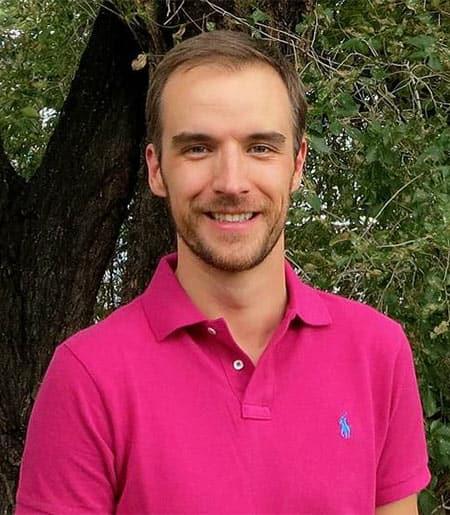
Brad Ramshaw is an Associate Professor in the Department of Physics at Cornell University. He completed his BSc (Hons.) in Physics at the University of British Columbia from 2002 to 2007 and earned his PhD in Physics from the same institution from 2007 to 2012.

HIs lab specializes in magnetotransport and ultrasonic measurements in extreme magnetic fields - up to 100 tesla and beyond. Magnetic fields of this magnitude allow the induction of new phases of matter in metallic and magnetic systems, suppress competing phases such as superconductivity, and to make detailed measurements of the electronic structure in metals. His lab also employs unique experimental techniques such as resonant ultrasound spectroscopy - a technique that gives unprecedented symmetry information about correlated states of matter.

Learn More:


Add to Calendar 2026-03-05T16:00:00 2026-03-05T17:00:00 High Pressure, Low Integrity: Debunking Claims of Room Temperature Superconductivity Event Information: Abstract: Room-temperature superconductivity is the holy grail of materials physics: it would revolutionize energy transmission and storage, computation, and transportation. In 1968, Neil Ashcroft proposed that room-temperature superconductivity might be achieved by subjecting hydrogen to immense pressures. Over the past 10 years, this approach has led to the discovery of the superconducting hydrides, with claims of superconducting transition temperatures up to 293 kelvin published in erstwhile-reputable journals like Nature. Two of the most spectacular claims in this field, however, were recently retracted, and even previously-accepted results have come under scrutiny.  I will provide a frontline perspective of how these fraudulent claims were uncovered, I will speculate on the role of the scientific journals in promoting such claims, and I hope to spark an open discussion on the role of the scientific community - and graduate students in particular - for setting transparency standards in experimental physics.   Bio: Brad Ramshaw is an Associate Professor in the Department of Physics at Cornell University. He completed his BSc (Hons.) in Physics at the University of British Columbia from 2002 to 2007 and earned his PhD in Physics from the same institution from 2007 to 2012. HIs lab specializes in magnetotransport and ultrasonic measurements in extreme magnetic fields - up to 100 tesla and beyond. Magnetic fields of this magnitude allow the induction of new phases of matter in metallic and magnetic systems, suppress competing phases such as superconductivity, and to make detailed measurements of the electronic structure in metals. His lab also employs unique experimental techniques such as resonant ultrasound spectroscopy - a technique that gives unprecedented symmetry information about correlated states of matter. Learn More: Read his faculty page at Cornell University: https://physics.cornell.edu/brad-ramshaw  Read this article form the Cornell Chronicle, "Brad Ramshaw named Experimental Physics Investigator" from Oct, 2025 See the Ramshaw Group website: https://chill.lassp.cornell.edu/  Watch his videos on Youtube: "Searching for topological superconductors using ultrasound" "Designing worlds at the nanoscale: quantum materials" "Take 2 for science: Grad Ramshaw"   Event Location: HENN 201