The Evolution of High-Performance Computing

Event Date:
2026-09-17T16:00:00
2026-09-17T17:00:00
Event Location:
HENN 201
Speaker:
Brett Gladman, University of British Columbia
Related Upcoming Events:
Intended Audience:
Everyone
Local Contact:

Brett Gladman (gladman@astro.ubc.ca)

All are welcome to this event!

Event Information:

Abstract:

Many problems in physics and astronomy are addressable by large-scale numerical methods that use computational algorithms on high-speed computers to solve differential equations.  A familiar example would be the evolution of some system from an initial condition, given the equations that govern propagation forward in time.  The speed with which such calculations can be done has increased dramatically (at an ever-accelerating rate) over the last roughly 80 years.  Although the examples in this talk will be drawn from dynamical astronomy, the history of change is the same throughout computational physics as increasing CPU power (tied to faster clock speed, enabling more floating point operations per second), and the development of vector operations allowed impressive boosts due to parallel computation.  I will discuss how these effects have increased the power of celestial mechanics simulations, especially with the usage of modern GPUs.

Bio:
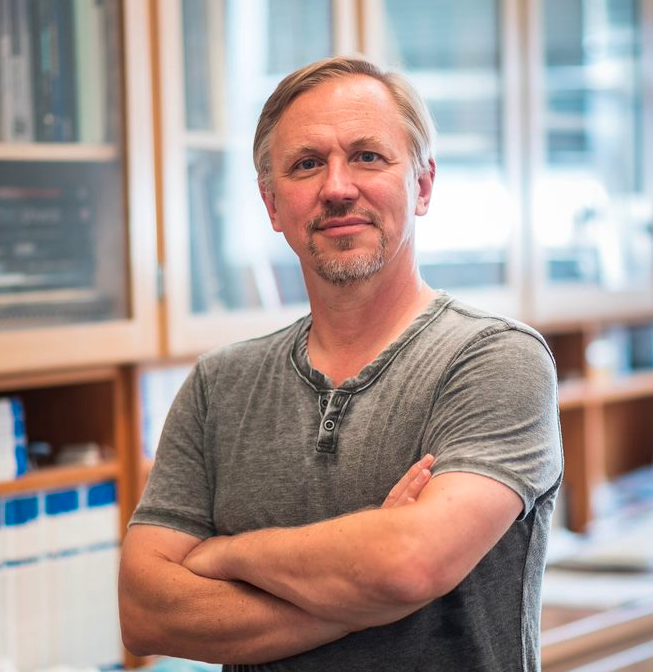
Brett Gladman is a Canadian astronomer and Professor in the Department of Physics and Astronomy at the University of British Columbia (UBC) in Vancouver, British Columbia. He is internationally recognized for his work in planetary science and Solar System dynamics, combining theoretical research with observational astronomy.

Gladman’s research focuses on the dynamics and evolution of the Solar System, including planetary science, minor planets, meteorites, and astrobiology. His theoretical work uses large-scale numerical simulations to investigate the long-term behavior of planets and smaller bodies, while his observational research involves optical surveys and the discovery and study of planetary moons, asteroids, and trans-Neptunian objects.

He is the discoverer or co-discoverer of numerous astronomical bodies in the Solar System, including asteroids, Kuiper Belt objects, and moons of the giant planets.

Gladman holds a Canada Research Chair in Planetary Astronomy and has been involved in major international surveys of the outer Solar System, including the Canada–France Ecliptic Plane Survey (CFEPS) and the Outer Solar System Origins Survey (OSSOS). These projects have identified and tracked a large population of well-characterized Kuiper Belt objects, including unusual trans-Neptunian objects such as 2004 XR190 ("Buffy") and 2008 KV42 ("Drac"), the latter being the first known trans-Neptunian object discovered on a retrograde orbit around the Sun.

His contributions to planetary science have been recognized with numerous honors, including the H. C. Urey Prize from the Division for Planetary Sciences of the American Astronomical Society and having a main-belt asteroid, 7638 Gladman, named in his honor.

Learn more:

  • See his faculty homepage at UBC: https://phas.ubc.ca/~gladman/
  • View his UBC Expert profile page: https://news.ubc.ca/expert/brett-gladman/
  • Read about the Gladman Asteroid on the Royal Astronomical Society of Canada website: https://rasc.ca/asteroid/7638 
  • Watch him on Youtube: 
    • "Planetary formation at the frontiers" https://www.youtube.com/watch?v=1etuGHiPE3s 
    • "CFHT discovi=eries of 200 Saturnian Moons" https://www.youtube.com/watch?v=3jo3erlRF9g
Add to Calendar 2026-09-17T16:00:00 2026-09-17T17:00:00 The Evolution of High-Performance Computing Event Information: Abstract: Many problems in physics and astronomy are addressable by large-scale numerical methods that use computational algorithms on high-speed computers to solve differential equations.  A familiar example would be the evolution of some system from an initial condition, given the equations that govern propagation forward in time.  The speed with which such calculations can be done has increased dramatically (at an ever-accelerating rate) over the last roughly 80 years.  Although the examples in this talk will be drawn from dynamical astronomy, the history of change is the same throughout computational physics as increasing CPU power (tied to faster clock speed, enabling more floating point operations per second), and the development of vector operations allowed impressive boosts due to parallel computation.  I will discuss how these effects have increased the power of celestial mechanics simulations, especially with the usage of modern GPUs. Bio: Brett Gladman is a Canadian astronomer and Professor in the Department of Physics and Astronomy at the University of British Columbia (UBC) in Vancouver, British Columbia. He is internationally recognized for his work in planetary science and Solar System dynamics, combining theoretical research with observational astronomy. Gladman’s research focuses on the dynamics and evolution of the Solar System, including planetary science, minor planets, meteorites, and astrobiology. His theoretical work uses large-scale numerical simulations to investigate the long-term behavior of planets and smaller bodies, while his observational research involves optical surveys and the discovery and study of planetary moons, asteroids, and trans-Neptunian objects. He is the discoverer or co-discoverer of numerous astronomical bodies in the Solar System, including asteroids, Kuiper Belt objects, and moons of the giant planets. Gladman holds a Canada Research Chair in Planetary Astronomy and has been involved in major international surveys of the outer Solar System, including the Canada–France Ecliptic Plane Survey (CFEPS) and the Outer Solar System Origins Survey (OSSOS). These projects have identified and tracked a large population of well-characterized Kuiper Belt objects, including unusual trans-Neptunian objects such as 2004 XR190 ("Buffy") and 2008 KV42 ("Drac"), the latter being the first known trans-Neptunian object discovered on a retrograde orbit around the Sun. His contributions to planetary science have been recognized with numerous honors, including the H. C. Urey Prize from the Division for Planetary Sciences of the American Astronomical Society and having a main-belt asteroid, 7638 Gladman, named in his honor. Learn more: See his faculty homepage at UBC: https://phas.ubc.ca/~gladman/ View his UBC Expert profile page: https://news.ubc.ca/expert/brett-gladman/ Read about the Gladman Asteroid on the Royal Astronomical Society of Canada website: https://rasc.ca/asteroid/7638  Watch him on Youtube:  "Planetary formation at the frontiers" https://www.youtube.com/watch?v=1etuGHiPE3s  "CFHT discovi=eries of 200 Saturnian Moons" https://www.youtube.com/watch?v=3jo3erlRF9g Event Location: HENN 201