Georg Rieger (rieger@phas.ubc.ca) and Brett Gladman (gladman@astro.ubc.ca)
All are welcome to this event!
Event Information:
Abstract:
Computing has been one of the major drivers of changes in modern society over the last 100 years. The invention of the transistor and the progressive miniaturisation of classical computers has led to moon landings, cell phones, and improvements in medicines and materials that we use today.
In this talk, I will discuss the rapidly progressing field of quantum computation. Quantum computers require the careful control of quantum states, which is a completely different principle than classical computers. The use of entangled states on the quantum computer allows for a representation of problems to solve on a set of few qubits. The correct operations on the quantum computers can potentially solve problems faster and with fewer resources than the classical computer. In particular, I will focus on the solution of linear algebra problems on the quantum computer applied to physics problems. I will contrast the potential advantages to solving these problems with this new type of computer and going beyond what is possible on the classical computer.
Bio:
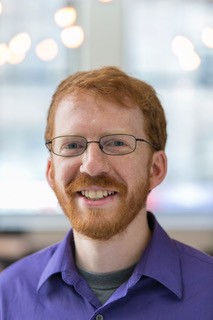
Thomas E. Baker holds a Canada Research Chair in Quantum Computing for Modelling of Molecules and Materials at the University of Victoria. His work on quantum information uses entanglement to solve problems more efficiently. Applications of his work extend into many areas including computer science, quantum chemistry, and sustainability.
Prof. Baker is lead of the Quantum Simulation Facility, and is actively involved in Quantum BC. He is the Principal Investigator of the Sensing and Quantum Materials cluster. He previously held a Fulbright U.S. Scholarship in York, United Kingdom and Prized Postdoctoral position at Institut quantique in Sherbrooke, Québec, Canada.
Add to Calendar
2026-01-22T16:00:002026-01-22T17:00:00How quantum computers can solve physics problemsEvent Information:
Abstract:
Computing has been one of the major drivers of changes in modern society over the last 100 years. The invention of the transistor and the progressive miniaturisation of classical computers has led to moon landings, cell phones, and improvements in medicines and materials that we use today.
In this talk, I will discuss the rapidly progressing field of quantum computation. Quantum computers require the careful control of quantum states, which is a completely different principle than classical computers. The use of entangled states on the quantum computer allows for a representation of problems to solve on a set of few qubits. The correct operations on the quantum computers can potentially solve problems faster and with fewer resources than the classical computer. In particular, I will focus on the solution of linear algebra problems on the quantum computer applied to physics problems. I will contrast the potential advantages to solving these problems with this new type of computer and going beyond what is possible on the classical computer.
Bio:
Thomas E. Baker holds a Canada Research Chair in Quantum Computing for Modelling of Molecules and Materials at the University of Victoria. His work on quantum information uses entanglement to solve problems more efficiently. Applications of his work extend into many areas including computer science, quantum chemistry, and sustainability.
Prof. Baker is lead of the Quantum Simulation Facility, and is actively involved in Quantum BC. He is the Principal Investigator of the Sensing and Quantum Materials cluster. He previously held a Fulbright U.S. Scholarship in York, United Kingdom and Prized Postdoctoral position at Institut quantique in Sherbrooke, Québec, Canada.
Learn More:
About Thomas: https://sites.google.com/view/bakerte
About quantum computing: Quantum Computing Explained | NIST
About quantum states: The Quantum Atlas | Quantum States
Event Location:
HENN 201