*Note: If registration is full, we are still usually able to accommodate walk-ins and wait-listed guests; please come by in case there are free seats!
Event Information:
Curious about how the universe actually works? Join the experts from UBC’s Department of Physics and Astronomy and the Department of Earth, Ocean and Atmospheric Sciences to find out fun facts about everything from the Milky Way to radio waves in this new, accessible science series: How the Universe Works! All are welcome!
Abstract:
Interstellar space is not empty; it contains a huge variety of molecules, including some that have been found in space and never on Earth! We will explore the different types of molecules that have been found outside of our solar system, including those that smell like raspberries and taste like vinegar. I will discuss how Astrochemists use different kinds of light from our galaxy to hunt for these molecules in space. You will learn about what clues interstellar molecules can give us about other stars and planets, and even our own origins.
Bio:
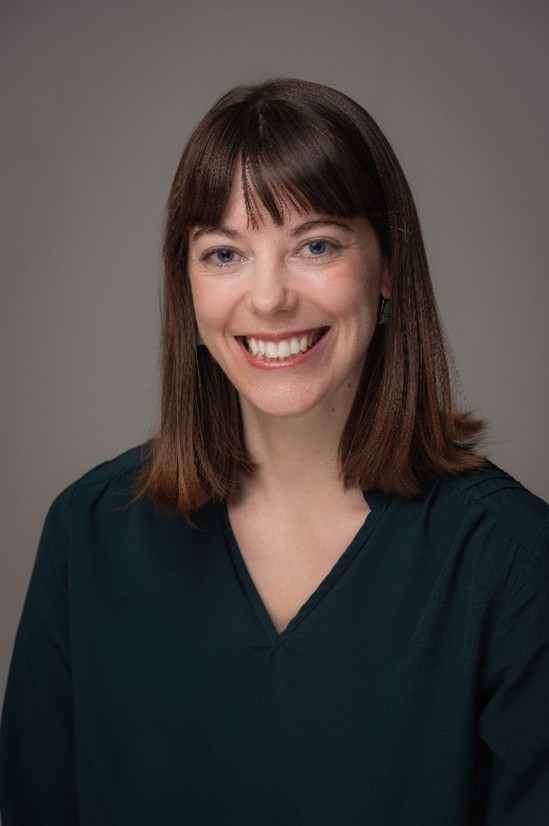
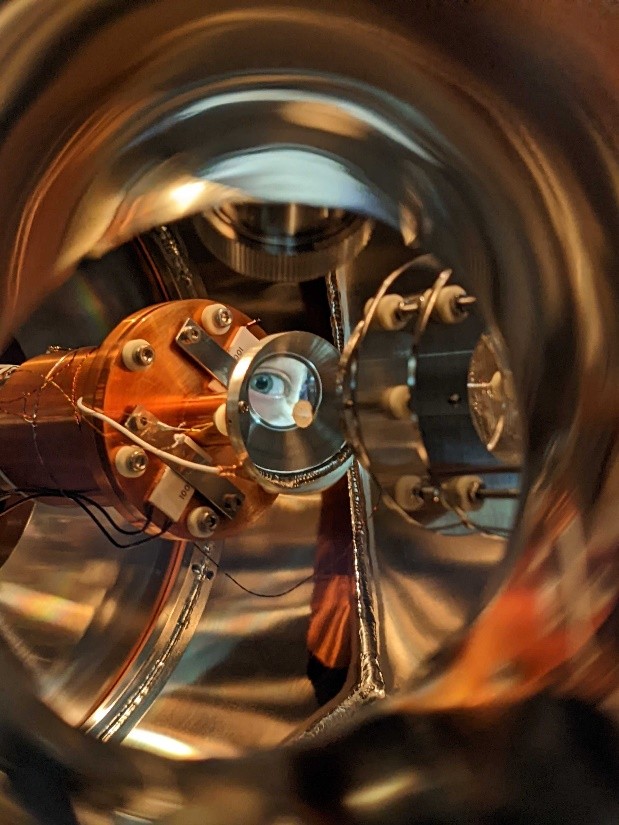
Ilsa Cooke is an Assistant Professor in the Department of Chemistry at the University of British Columbia. She completed her undergraduate studies at the University of Otago, in Dunedin, New Zealand, where she worked on measuring uranium-isotope ratios in meteorites and marine carbonates. Following her graduation, she worked as a Research Assistant at the Centre for Trace Elements Analysis, before moving to the University of Virginia as a Fulbright fellow to conduct her PhD in Physical Chemistry with John T. Yates Jr. Her PhD focused on producing and measuring astrochemical ice analogues using space simulation vacuum experiments. From 2016-2018, she worked as a visiting researcher in the group of Karin Oberg at the Harvard-Smithsonian Center for Astrophysics. In 2018, she moved to the University of Rennes 1 to join the group of Ian Sims and work on developing new methods to measure reactions at low temperatures relevant to astrochemistry. In 2019, she was awarded a Marie Curie postdoctoral fellowship to study low-temperature reactions involving CN and aromatic molecules. Since moving to UBC, her group has focused on building laboratory experiments to constrain the formation of aromatics and other complex organic molecules in the interstellar medium. She is particularly interested in the formation of heterocycles and the properties of radicals on low-temperature ice surfaces. In addition to her laboratory work, Dr. Cooke is a co-PI of the GOTHAM collaboration and uses radio telescopes to probe aromatic molecules and their precursors in star-forming regions.
Selected Honours and awards or selected publications:
Cottrell Scholar Award, 2026
The Laboratory Astrophysics Division (LAD) of the American Astronomical Society (AAS) Early Career Award, 2024
Marie Skłodowska-Curie Individual Fellowship, 2019
Add to Calendar
2026-05-21T18:00:002026-05-21T19:30:00How the Universe Works! Interstellar Molecules!Event Information:
Curious about how the universe actually works? Join the experts from UBC’s Department of Physics and Astronomy and the Department of Earth, Ocean and Atmospheric Sciences to find out fun facts about everything from the Milky Way to radio waves in this new, accessible science series: How the Universe Works! All are welcome!
Abstract:
Interstellar space is not empty; it contains a huge variety of molecules, including some that have been found in space and never on Earth! We will explore the different types of molecules that have been found outside of our solar system, including those that smell like raspberries and taste like vinegar. I will discuss how Astrochemists use different kinds of light from our galaxy to hunt for these molecules in space. You will learn about what clues interstellar molecules can give us about other stars and planets, and even our own origins.
Bio:
Ilsa Cooke is an Assistant Professor in the Department of Chemistry at the University of British Columbia. She completed her undergraduate studies at the University of Otago, in Dunedin, New Zealand, where she worked on measuring uranium-isotope ratios in meteorites and marine carbonates. Following her graduation, she worked as a Research Assistant at the Centre for Trace Elements Analysis, before moving to the University of Virginia as a Fulbright fellow to conduct her PhD in Physical Chemistry with John T. Yates Jr. Her PhD focused on producing and measuring astrochemical ice analogues using space simulation vacuum experiments. From 2016-2018, she worked as a visiting researcher in the group of Karin Oberg at the Harvard-Smithsonian Center for Astrophysics. In 2018, she moved to the University of Rennes 1 to join the group of Ian Sims and work on developing new methods to measure reactions at low temperatures relevant to astrochemistry. In 2019, she was awarded a Marie Curie postdoctoral fellowship to study low-temperature reactions involving CN and aromatic molecules. Since moving to UBC, her group has focused on building laboratory experiments to constrain the formation of aromatics and other complex organic molecules in the interstellar medium. She is particularly interested in the formation of heterocycles and the properties of radicals on low-temperature ice surfaces. In addition to her laboratory work, Dr. Cooke is a co-PI of the GOTHAM collaboration and uses radio telescopes to probe aromatic molecules and their precursors in star-forming regions.
Selected Honours and awards or selected publications:
Cottrell Scholar Award, 2026
The Laboratory Astrophysics Division (LAD) of the American Astronomical Society (AAS) Early Career Award, 2024
Marie Skłodowska-Curie Individual Fellowship, 2019
Fulbright Science and innovation award, 2013
Learn More:
About astrochemistry: Astrochemistry - Wikipedia
About aromatic molecules: Aromatic Compounds: What Makes Them Special? Event Location:
Vancouver Public Library - Central Branch (Alice MacKay Room, Lower Level)